


The VHS player wasn’t ours. My older brother had borrowed it from a friend — one of those people who had somehow gotten their hands on one in the early 90s, brought back from the US to Santiago. At the time, just having that machine at home felt like something out of science fiction. The idea that you could watch a movie in your own living room, whenever you wanted, was still new. Still strange.
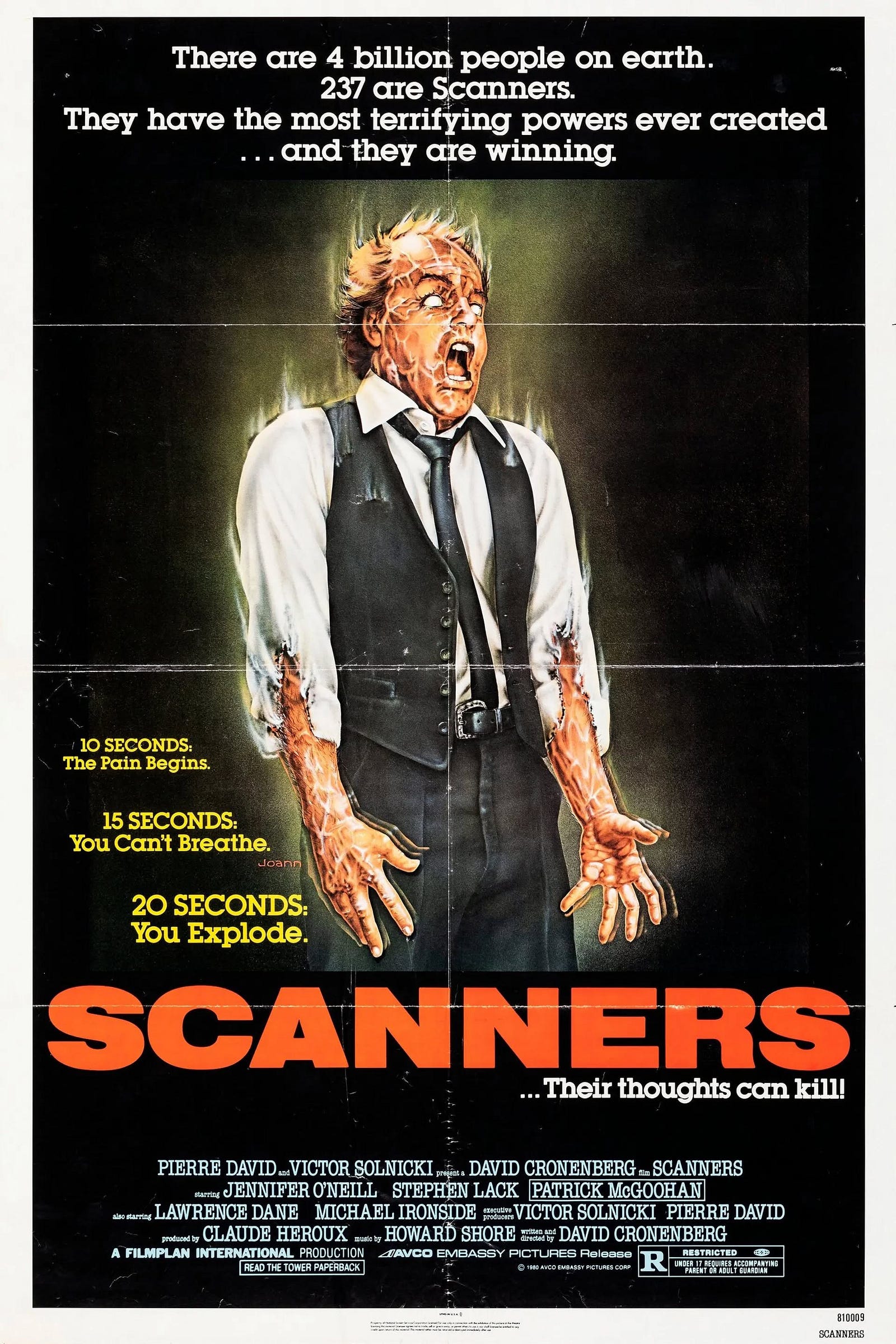
They have Scanners. I wasn’t invited to watch it, and technically, I didn’t. But I stayed nearby. Just out of sight. Close enough to hear. I knew I wasn’t supposed to be there, but I also knew something unusual was happening. That this wasn’t just another TV show or cartoon. That meant something to watch a film like this, in this way.
And then it happened.
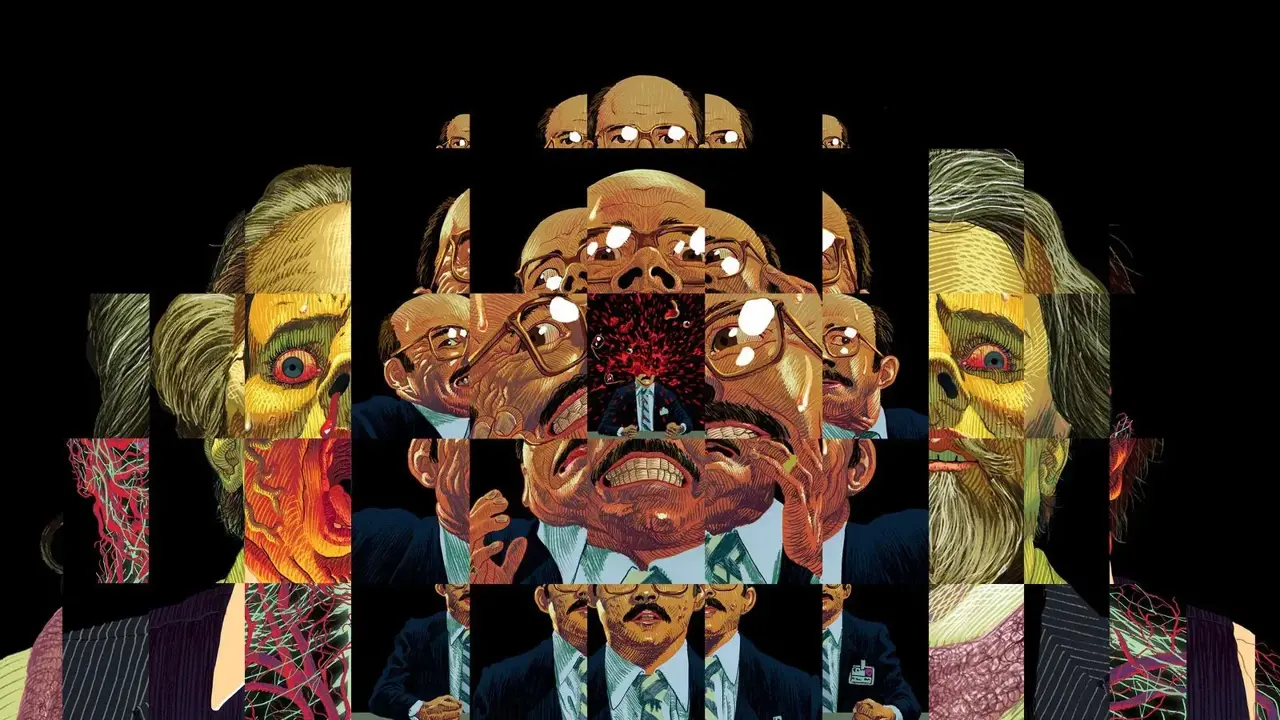
A man is sitting at a table, explaining a demonstration. He says he’s going to scan someone in the audience. Another man stands up. There’s something in his posture, something in the music. You feel the scene building, even if you don’t know how or why.
And then the first man’s head explodes.
How They Did It
I didn’t understand it at the time, of course. I only knew what I saw.
Years later I learned the story behind that moment.
There was no digital trickery involved. No computer-generated effects. They built a physical model of the actor’s head, made from latex and wax and gelatin, filled it with fake blood, scraps from the lab, even old burgers, and placed it on a set. When the usual effects didn’t look right — when explosives caused too much smoke or plaster looked too artificial — the special effects team resorted to something simpler. They loaded a shotgun with kosher salt and fired it from behind the dummy.
That version — chaotic, visceral, impossible to fake — is what we see in the final film. One take. Four cameras. Everyone else off set, behind vehicles or walls. It was messy, dangerous, and completely unforgettable.
What Stayed With Me
I’ve thought about that scene for years. Not just because of the gore, which is graphic and excessive, but because of the build-up. The quietness before. The shift in tone. The way something starts to go wrong, and you can feel it before anything actually happens.
It wasn’t just a shock. It was a moment that made me understand movies differently.
I didn’t have the language for it back then. I didn’t know who Cronenberg was, or what “practical effects” meant, or why anyone would use corn syrup instead of blood. But I understood that something had been created. That someone had made a choice — or many choices — and that those decisions, somehow, reached all the way into a small apartment in Santiago and changed how I looked at a screen.
That scene, for all its violence, had clarity. It was cinema reduced to an idea, and then built again with hands, tools, timing, and care.
And even now, decades later, I remember it clearly.
The glow of the TV. The sound of the tape. My brother watching with his friend. Me, just behind the couch. Quiet. Not breathing.
Learning something I wouldn’t fully understand for years.
Related Works
- The Fly (1986, Film, David Cronenberg) – More Cronenberg-Walas body horror brilliance
- The Fury (1978, Film, Brian De Palma) – A spiritual precursor with another psychic explosion
- Videodrome (1983, Film, David Cronenberg) – Gore meets philosophy, with butcher scraps and all
- RoboCop (1987, Film, Paul Verhoeven) – Violent practical effects taken to satirical extremes
- The Thing (1982, Film, John Carpenter) – Legendary practical gore and paranoia
- The Brood (1979, Film, David Cronenberg) – Where Cronenberg’s horror style really began
- Possessor (2020, Film, Brandon Cronenberg) – The son carries on the family’s surreal tradition
- Total Recall (1990, Film, Paul Verhoeven) – Sci-fi, identity, and grotesque body effects
- eXistenZ (1999, Film, David Cronenberg) – Flesh meets interface, in classic Cronenberg fashion
- American Werewolf in London (1981, Film, John Landis) – Iconic transformation scene via physical FX
Technical Info
- Release: 1981
- Director: David Cronenberg
- Writer: David Cronenberg
- Main Cast: Stephen Lack, Michael Ironside, Patrick McGoohan
- Runtime: 103 minutes
- Genre: Sci-fi horror
- Distributor: AVCO Embassy Pictures
- Where to Watch: Available for rent/purchase on most platforms
Thanks taking the time of reading Insights by Felipe Aguilera. I write about film, creativity, and the strange ways certain scenes stay with us.