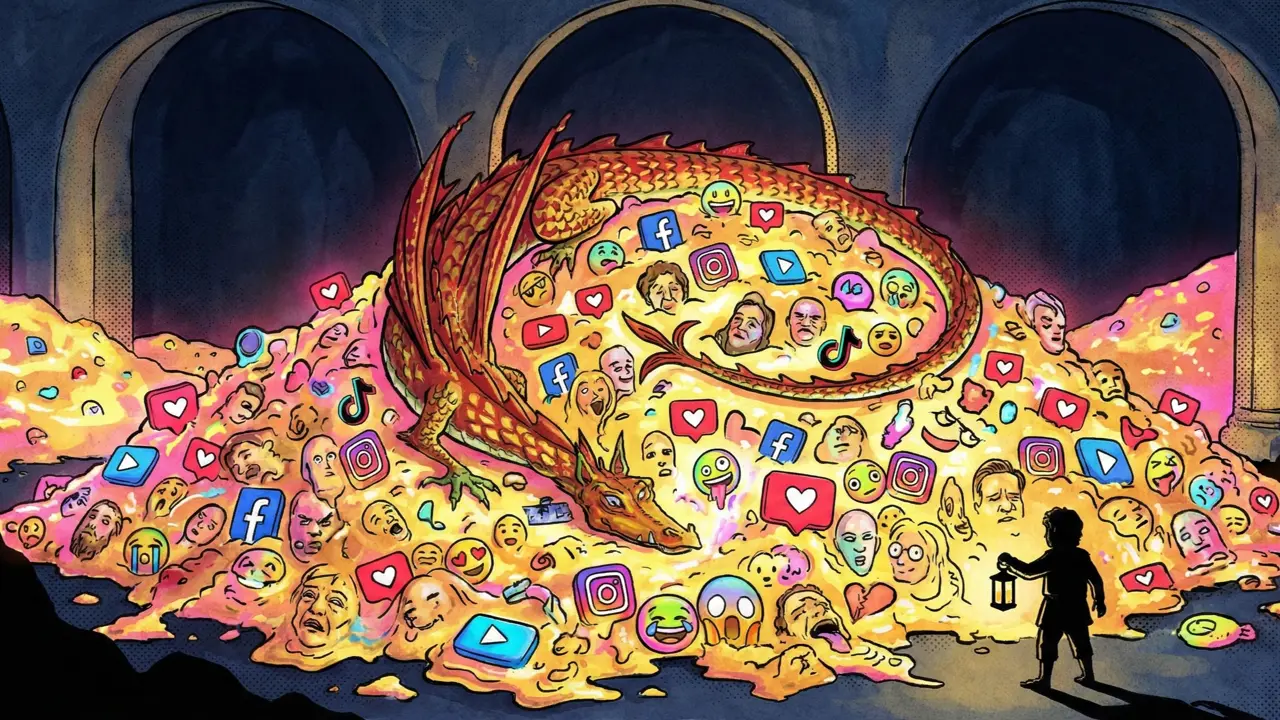



The Promise
We were promised that the infinite scroll would be a window into the world. With the arrival of powerful digital tools, the promise shifted. Now we have an infinite stream of content tailored just for us. In theory, we should never be bored again. Our feeds are supposed to be a vibrant marketplace of ideas, entertainment, and connection that keeps us company in those quiet moments before sleep.
The Hidden Risks
The reality is much grimier. In its culture section, The Economist recently crowned its word of the year for 2025: “Slop”.
Nomenclature: What is “Slop”?
According to The Economist, it is a term for the low-quality, meaningless content that is clogging the internet. While often associated with AI-generated text or fake clips, it refers to any “nonsense or rubbish” created without care. It is the digital equivalent of “food scraps”. Unfiltered noise that offers no nourishment for the mind and contributes to “brain rot”.
I felt this acutely during my own nightly routine. I’d find myself doomscrolling through YouTube or watching “crappy videos” that I’d fall asleep to halfway through. This isn’t just “junk food” for the brain; it’s an unedited, unpolished product that lacks the human care of a finished work of art. When you consume slop, you aren’t resting; you are just drowning in the noise.
A Practical Approach
To combat this, I’ve returned to a 15th-century technology: the book. Specifically, I revisited The Hobbit**.**
Returning to Tolkien at nearly 50 years old is a completely different experience than discovering him at 14. Where the internet offers “slop”, weak, poorly nourishing nonsense. Tolkien offers a “simple and polished work of art.”
Instead of the frantic pace of a feed designed for likes, I found:
- Intentionality: A story that was “just trying” to be a small tale for kids before it evolved into a world-shaping mythology.
- Mental Progress: A sense of accomplishment that comes from finishing a chapter rather than the empty fatigue of scrolling.
- New Perception: Noticing things I missed as a teenager, like how the “big” antagonist Smaug is actually only a glimpse of the total adventure.
My Insight
If our digital world is becoming sodden with slop, our most strategic move is to become “sloptimists” by voting with our attention. We have the power to decide what earns a place in our mental real estate.
I want to be clear. This is not a demand or even a suggestion. It is simply a testimony of what has worked for me. But if sharing this testimony is helpful for someone else’s mental clarity, I will be delighted.
We do not need more content. We need more context. Tolkien started small with a story about a hole in the ground, and it grew into a masterpiece because it had a soul. Slop, by definition, has none. It is created to be seen, not to be felt. It is designed to capture a click, not to nourish a mind.
If you want to fix your sleep and perhaps your perspective, stop scrolling the slop and start walking like an adventurous Hobbit.