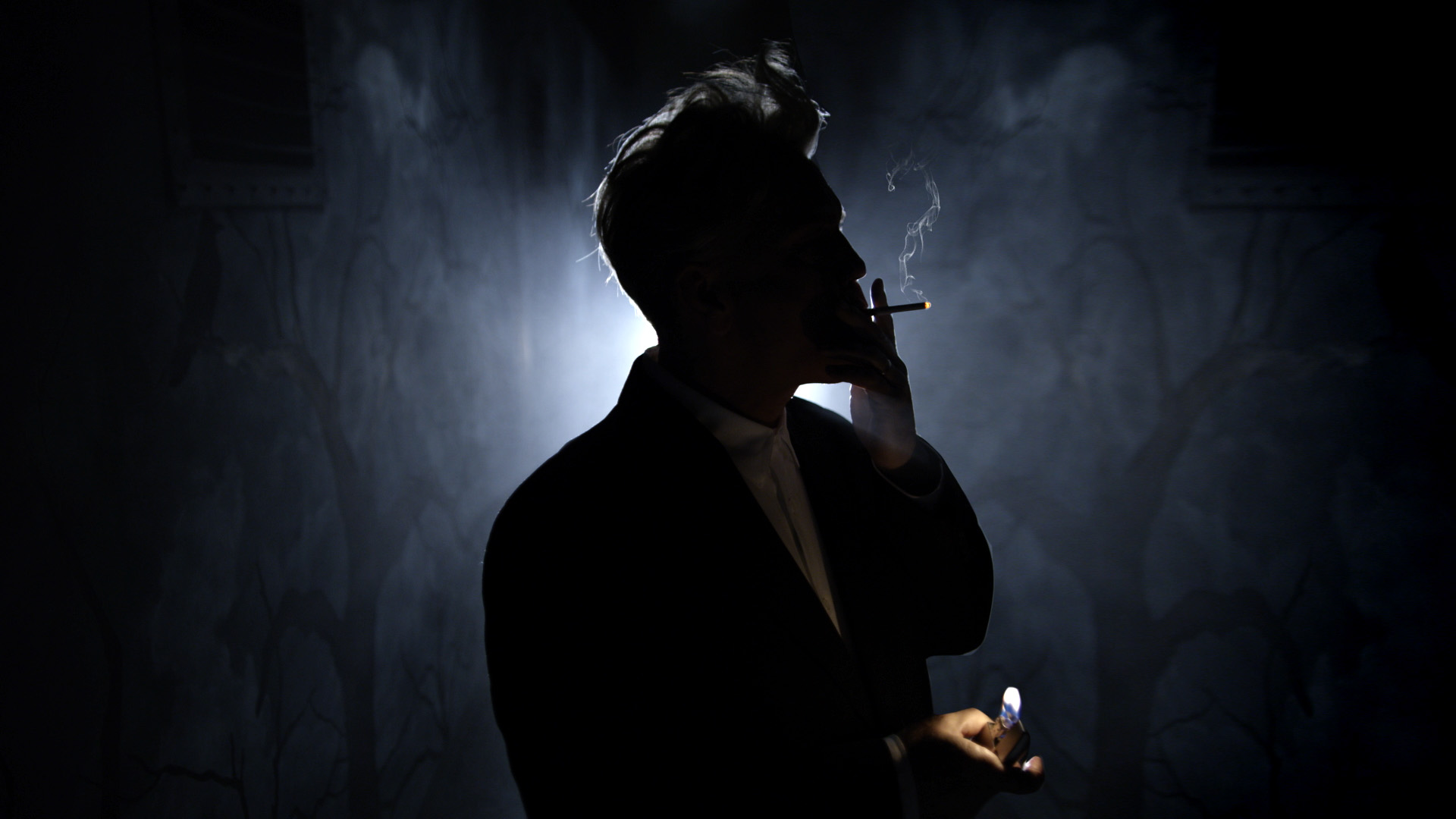



I don’t usually write eulogies or dedications when great figures die. I think that sometimes it becomes just another shout in a cloud of unclear and often unnecessary noise. Perhaps, that’s why I don’t like wakes and funerals either. However, a week after the death of David Lynch, the avant-garde American director, I would like to leave a few words about what he meant to me.
Personally
- I first heard about the work of David Lynch when I was 13 years old. My classmates were talking about Twin Peaks and the sacrifices they made to follow it, considering the inconsistency of its broadcast and the late-night schedule that Canal 13 presented it in Chile in the early 1990s.
- Years later, I attended a small film series at the Instituto Nacional, with films by Lynch, Kieslowski, Wenders, among others. After seeing one of his films, I realized that there was another kind of cinema. It was pompously called “Art Cinema”, where action and terror were not the protagonists, but rather the feelings and deep messages that “left you thinking”.
- He was one of the first directors whose name I memorized, and he motivated me to see everything possible of his work. I followed the Cine Arte Normandie programs, watched VHS tapes from friends in very poor quality, and above all, talked about Lynch with anyone I could connect with and try to understand more about his films and oddities.
- After trying to understand (by watching multiple times) The Elephant Man, Blue Velvet, and Wild at Heart, I understood that it was not necessary to “understand his films”, but rather to savor them and be amazed by the feeling that the terrible exists within the everyday, and that, through the lens of Lynch, all this could be observed as something beautiful.
- Finally, thanks to the magic of the Internet, I got to know the human being behind the work. And although it is not always advisable to unite the two, I discovered that Lynch was, in himself, like a character from his own films: kind, simple, and impeccable in his style. A man of routines and habits, always seeking to create and express his passion. “A good guy” that I learned to admire, applaud, and value, possibly more than his work, over the years.
Cinematically
- Lynch presents the terrible and disturbing aspects of the everyday, not by contrasting them, but by opening our eyes. With his visual and narrative resources, he brings us closer to detail, texture, and sensation. He shows us nature: dark, kind, comfortable, terrible, and mysterious all at once.
- He taught me that the work lives in the eye of the beholder. Although I often felt frustrated at the end of his films, without clearly understanding what happened, over time I understood that his work is a journey. A journey full of sensations, surprises, and discoveries where, like life itself, not everything has closure or a clear explanation. And that’s okay.
- His stories are simple, uncomplicated. They are a base that allows us to explore sensations, discover details, and be amazed by how he manages to convey the ugly and grotesque within an everyday, colorful framework.
- Sound is another character. It sets the mood and breaks the atmosphere. Lynch, thanks to his collaboration with Angelo Badalamenti, creates beautiful melodies, full of nostalgia, that contrast with terrible scenes. It causes an effect of disorientation and ambiguity.
Every time I remember Lynch, I find beautiful and disturbing fragments. That deepen, reveal, and tremble. He presents the texture of reality: beautiful and horrifying, worth discovering day by day.
Extras
Themes in the work of David Lynch over the years
- In his early films, Eraserhead and The Elephant Man, Lynch explores the world’s reaction to deformities and differences.
- With Blue Velvet, Wild at Heart, and Twin Peaks, he presents an everyday and friendly reality that hides violence and visceral evil.
- Lost Highway, Mulholland Drive, and Inland Empire seem inspired by his own experience in Hollywood, where fame and dreams mix with dark motivations.
- Finally, with Twin Peaks: The Return, Lynch revisits the universe of Laura Palmer in a journey that feels like a farewell.
For discussion
Who will be the Lynch, Wenders, or Kieslowski for the new generations? Which contemporary directors inspire young people to explore cinema beyond the conventional? In a world where information is infinite and barriers are almost non-existent, it is difficult to define a new group of filmmakers who will mark a generation.
Perhaps, for us, all that remains is to value the time when discovery was more gradual and appreciate how privileged we were to experience the beauty and horror of the cinema of our time.
Filmography
Eraserhead (1977)
The Elephant Man (1980)
Dune (1984)
Blue Velvet (1986)
Wild at Heart (1990)
Twin Peaks (1990-1991) TV Series - Co-created with Mark Frost
On the Air (1992) - TV Series - Co-created with Mark Frost
Twin Peaks: Fire Walk with Me (1992)
Hotel Room (1993) - TV Series - Co-created with Mark Frost
Lost Highway (1997)
The Straight Story (1999)
Mulholland Drive (2001)
Inland Empire (2006)
Twin Peaks: The Return (2017) - TV Series - Co-created with Mark Frost