


The Wonder of the Small Start
There is a beautiful, recurring myth in the creative world that masterpieces arrive fully formed. We often look at the vast, towering mythology of Middle-earth and assume J.R.R. Tolkien sat down with the entire history of The Silmarillion already mapped out in his mind.
The reality is far more human and, in many ways, more inspiring. It all began with a light, simple tale about a Hobbit. At the time, Tolkien had no idea he was writing the prologue to an epic trilogy that would redefine literature. He was simply starting small. This transition from a charming children’s story to the massive, complex world of The Lord of the Rings is a testament to the power of letting a project grow naturally.
The Trap of the “Grand Plan”
When we obsess over having a perfect ten-year roadmap before shipping our first draft, we fall into a dangerous trap. This “Grand Architect” mindset often leads to a paralysis that prevents us from ever starting.
- Strategic Stagnation: The need for total clarity often results in over-planning. We miss the opportunity to learn from the work itself.
- The Final Edit Fallacy: In my recent review of the film Jay Kelly, I reflected on the idea that life does not offer a “Take 2.” However, as Tolkien proved, our creative work is much more forgiving.
- Loss of Agility: Over-committing to a massive vision early on makes it difficult to pivot when you discover a deeper, more mature direction for your project.
The 1957 “Patch”
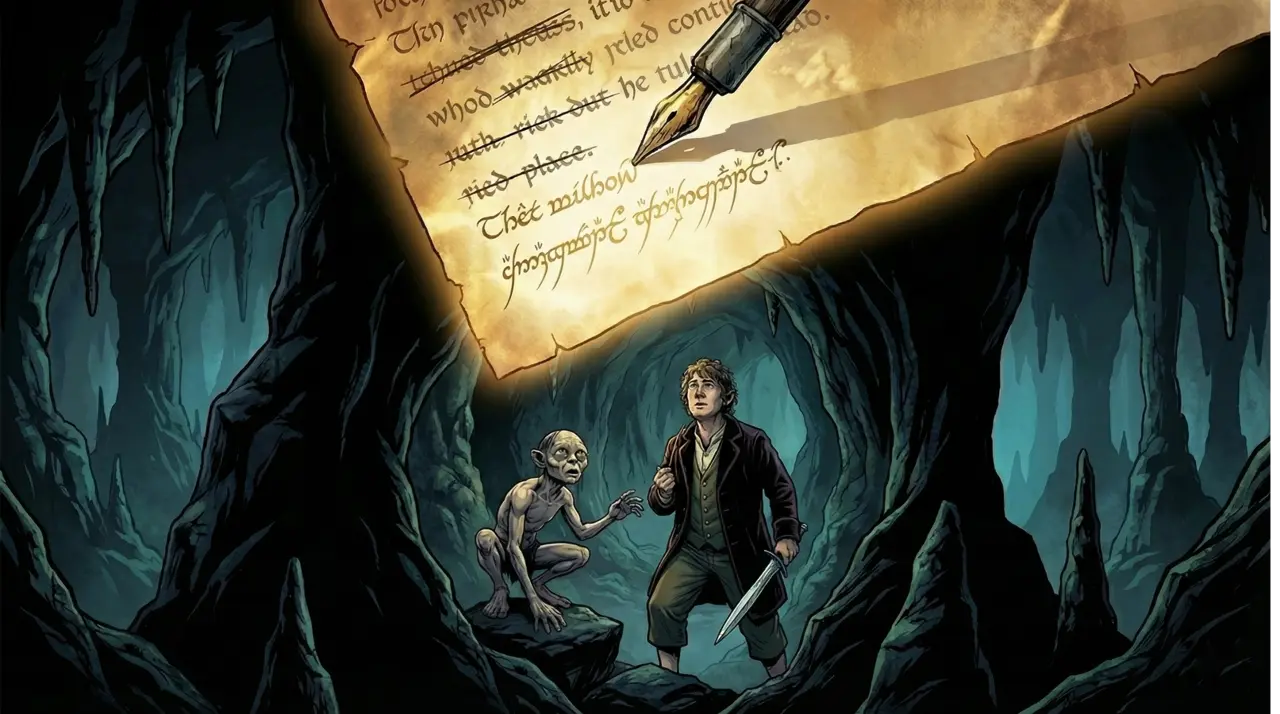
The most amazing part of Tolkien’s journey is how he handled his own evolution. In 1957, nearly twenty years after The Hobbit was published, he realized his original version of the chapter “Riddles in the Dark” no longer fit the mature, darker world he had built.
He did something many would consider unthinkable today. He retroactively edited his published work to align the history of the Ring with his new trilogy. He “patched” his story to connect his past self with his more mature creative vision.
To apply this “Tolkien Patch” to your own work:
- Ship the Small Tale: Focus on creating a high-quality, self-contained product first.
- Embrace the Evolution: Give yourself the permission to rearrange your foundations as your perspective grows.
- Iterate with Intent: Use the tools of the digital age to evolve your work. If Tolkien could “patch” a physical book twenty years later, we have no excuse to fear iteration.
The Beauty of Retrospective Alignment
There is something deeply encouraging about the fact that the greatest world-builder in history was just “trying things out” at the beginning. True expertise is not about predicting the future with perfect accuracy. It is the willingness to refine the past to make sense of who you have become.
You do not need to be clear about the finish line to start. You only need to be committed to the evolution of the work. If Tolkien could refine his masterpiece two decades later to accommodate his growth, you can certainly ship your first version today.