


Synopsis
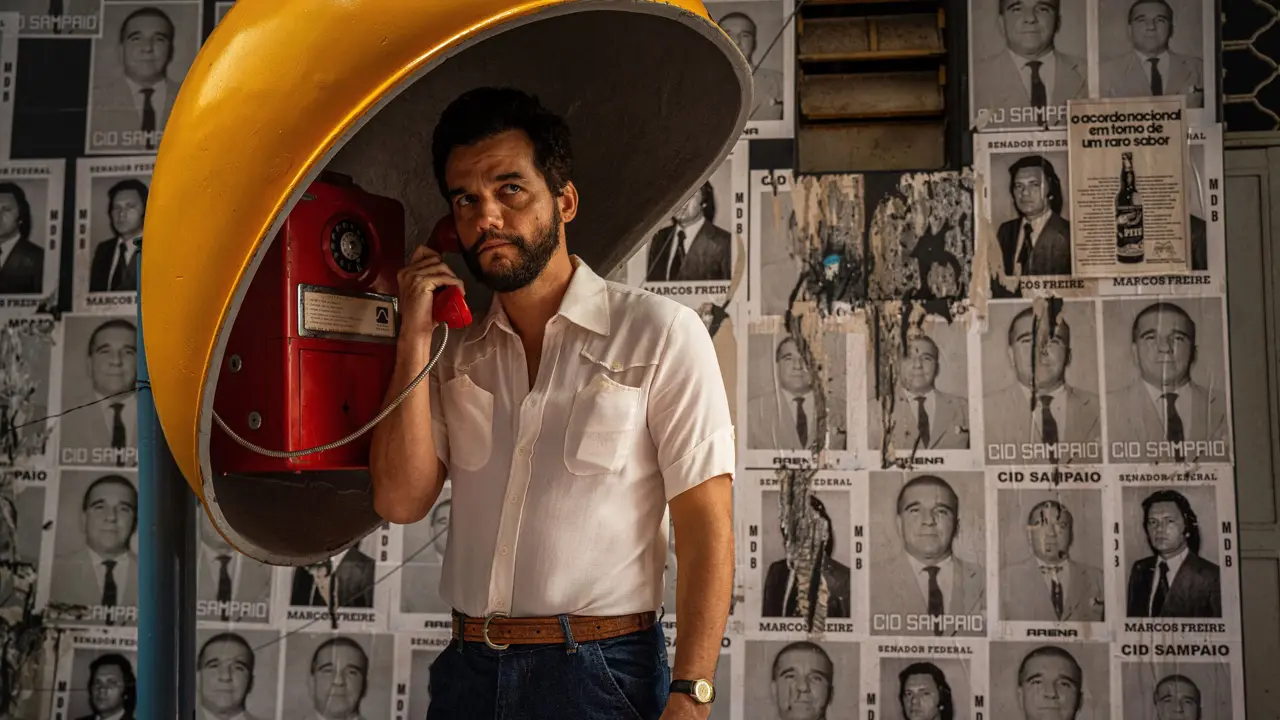
In The Secret Agent, we are taken to 1977 Brazil. Armando (Wagner Moura) is a man on the run. Fleeing political persecution, he leaves São Paulo and relocates as “Marcelo” to Recife under a new identity during the Carnival season. He tries to rebuild his life within a community that acts as a hidden network for dissidents. However, he is under constant observation by hitmen aiming to kill him for his past actions.
The film is a nearly three hour journey that gradually reveals his past mistakes while he navigates a society suffocated by a corrupt government.
What I Liked
• The Documentary Atmosphere The setting is perfectly adapted. You feel immersed in a precarious, humble, and deeply sad society. It avoids cinematic gloss and presents the raw reality of people surviving under an authoritarian regime. The film feels very close to a documentary about normal citizens trying to exist.
• The Carnival Contrast The movie shatters my stereotype of Brazilians always being happy and dancing. The Carnival happens in the background, but the environment is unsafe and filled with crime, violence, and dead bodies. This contrast makes the setting deeply unsettling and highlights the societal distress.
• The Human Network The portrayal of the humanitarian network is fascinating. It operates under the hood of a failing government where every job is political. It highlights human beings helping each other survive a pathetic and broken system. Wagner Moura anchors this perfectly with a very human, grounded performance.
What Could Be Better
• The Misleading Title The name The Secret Agent sets the wrong expectations. It implies a fast-paced action movie or an undercover spy thriller. This is a slow, methodical drama about political survival. Viewers expecting an espionage blockbuster will be confused.
• The Demanding Runtime At nearly three hours, the pacing requires patience. The gradual reveal of Armando’s past and the slow progression of the hitmen tracking him down is engaging, but the sheer length might feel punishing for viewers not fully invested in the historical context.
My Insight
Authoritarian regimes look less like active war zones and more like a failing bureaucracy. The society presented here is sad and pathetic. The government is not working properly, and every single job or opportunity is tied to political allegiance. In this environment, Armando is just a normal man relying on a quiet network of strangers to stay alive.
The film proves that under oppressive governments, simply moving on, finding a new job, and staying alive are profound acts of resistance. The distress is constant, but the human capacity to build support networks under the radar shows how people adapt when institutions fail them completely.
Rating 🌟8/10.
A gripping, historically dense drama that captures the suffocating reality of living under observation.
Recommendation: Go in expecting a heavy historical drama, completely ignoring the action-spy title.
For Discussion
It seems impossible to separate Latin American cinema from political trauma. Why do you think our region’s most acclaimed films are so consistently rooted in government corruption and systemic failure?
And how crucial is it to understand the specific political history of a country to fully grasp the emotional weight of a film like this? Can a viewer without knowledge of 1970s Brazil truly appreciate the stakes?

Related Works
- The Lives of Others (2006): For the ultimate theme of living under constant state surveillance and political paranoia.
- The Secret in Their Eyes (2009): For an Argentine perspective on how the trauma of a corrupt system haunts people for decades.
- Elite Squad (2007): To see Wagner Moura in a much more explosive, direct look at systemic corruption in Brazil.
Technical Info
- Director: Kleber Mendonça Filho
- Starring: Wagner Moura, Maria Fernanda Cândido, Gabriel Leone
- Platform: Theathers. Soon in MUBI
- Year: 2025
- Genre: Political Thriller / Drama