


Synopsis
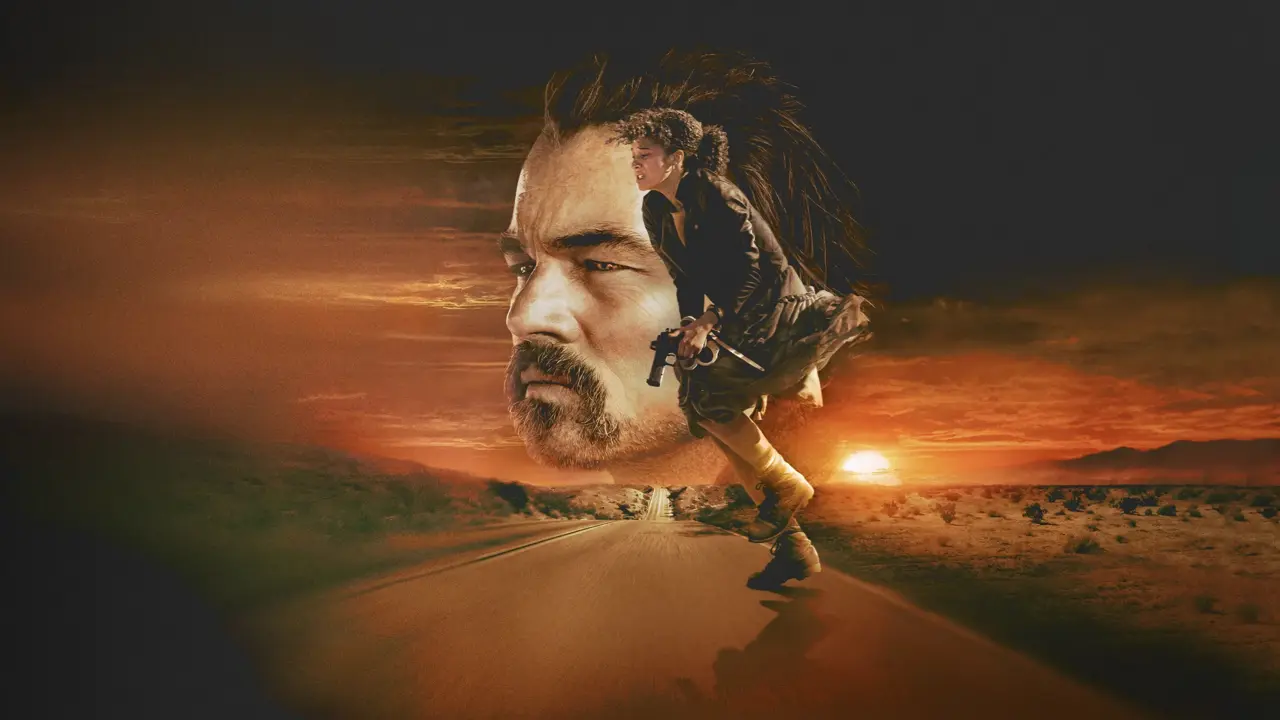
In One Battle After Another, Paul Thomas Anderson frames a clash of two opposing forces: the “French 75” (a revolutionary cell helping immigrants) against a heavy-handed, “white power” military structure. Entangled in this is Sean Penn’s character, a corrupt force with a deviant obsession, and the eventual downfall of the revolutionary group. But beneath the political noise and the 18-year timeline, this is fundamentally a story about fatherhood, family, and the attempt to “clean the past” while navigating a world that wants to negate who you are.
The film moves from one battle to another (literally), refusing to let the viewer rest as it barrels through a changing American landscape.
What I Liked
The “Tick-Tock” Intensity: The sound design acts as a narrator. There is a specific “ticking bomb” effect in the background during high-stakes moments that creates subconscious urgency. Even scenes that are technically just “fun” feel dangerous because of this auditory layering.
The Car Chase: This sequence defines the “Cinematic Experience.” The camera work places you inside the car. You feel the speed and the gravity. It transforms a mechanical action into an emotional climax.
The Relentless Pacing: Anderson manages a story that spans nearly two decades without losing momentum. There are no “down moments.” It keeps the viewer in a state of constant engagement, proving that rhythm is just as important as the script.
What Could Be Better
The “Woke” Misinterpretation: Some might label this a “political” movie because of the conflict between the military and the immigrant-focused cell. This is a superficial reading that might alienate some, but it is better viewed as a framing of “crashing forces” rather than a lecture.
The Release Apathy: This feels like a future cult classic that was met with a wave of general apathy during the movie year. It is a shame this didn’t generate a larger conversation immediately, as the craft deserves study.
My Insight
We need more directors with “Carte Blanche.” Paul Thomas Anderson has reached a level of prestige where he is essentially told: “Go. Make what you want. We know it will be a success.” The result is a film that feels distinct, dangerous, and specific. It doesn’t feel committee-approved. In lesser hands, this would be a standard political thriller.
In Anderson’s hands, the texture of the film—the rhythm, the music, the frantic editing—tells the story more effectively than the dialogue. It serves as a reminder for any creative industry: Trust is an aesthetic**.** When you remove the guardrails and trust the creator, you get something with a pulse. You get “Kinetic Energy.”
Rating 🌟9/10.
An amazing cinematic experience by a director that is trusted and confident enough to make it.
For Discussion
Paul Thomas Anderson operates with a level of “Carte Blanche” that is nearly extinct in modern cinema. In your own industry, whether it is design, tech, or management, how do we rebuild the trust necessary for creators to take these kinds of high-stakes risks without committee interference? And moreso, how we can earn that trust?.
Related Works
- Uncut Gems (2019) – For that same relentless, “ticking clock” stress.
- Heat (1995) – For the mastery of sound design and the collision of professional forces.
- The French Connection (1971) – For the raw, practical intensity of the car chases and the gritty 70s atmosphere.
- There Will Be Blood (2007) – For another look at a Paul Thomas Anderson protagonist driven by a singular, destructive intensity.
Technical Info
Director: Paul Thomas Anderson
Starring: Leonardo DiCaprio, Sean Penn, Chase Infiniti, Regina Hall, Teyana Taylor, Benicio del Toro and more.
Platform: HBO Max
Year: 2025
Genre: Political Thriller / Drama
Recommendation: Must-watch for the craft, but expect high intensity.