


Synopsis
Indre and I watched this together as part of our preparation for a trip to Japan later this year. We wanted to understand the country beyond its food and temples, to get a sense of what one of the defining moments in Japanese history actually felt like for the people living through it. Grave of the Fireflies delivered that and way more.
The film is set in Kobe, 1945, during the American firebombing campaigns that swept through Japan in the final months of World War II. Because most of the city was built on wood, the incendiary bombs destroy buildings, erased entire neighborhoods and families. The animated film puts you right inside that disorientation, through constant air raid sirens, fires visible on the horizon, and the faces of ordinary people trying to absorb a reality that refuses to stop worsening.
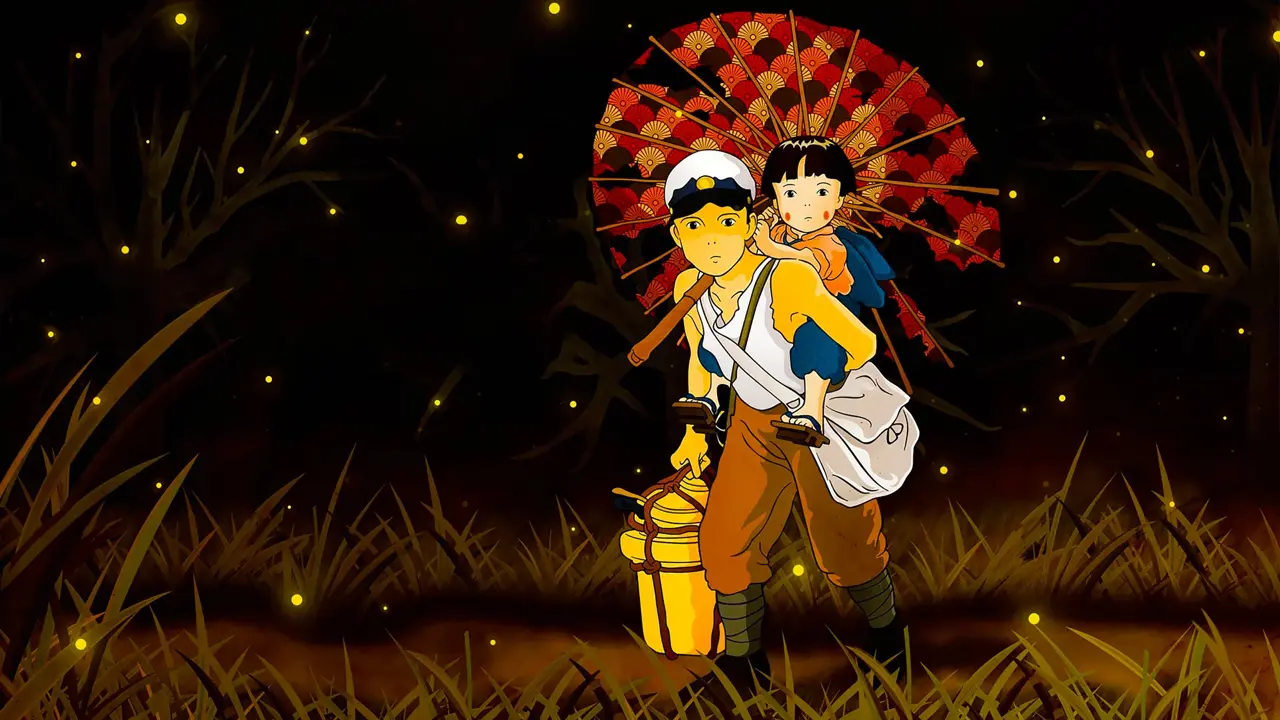
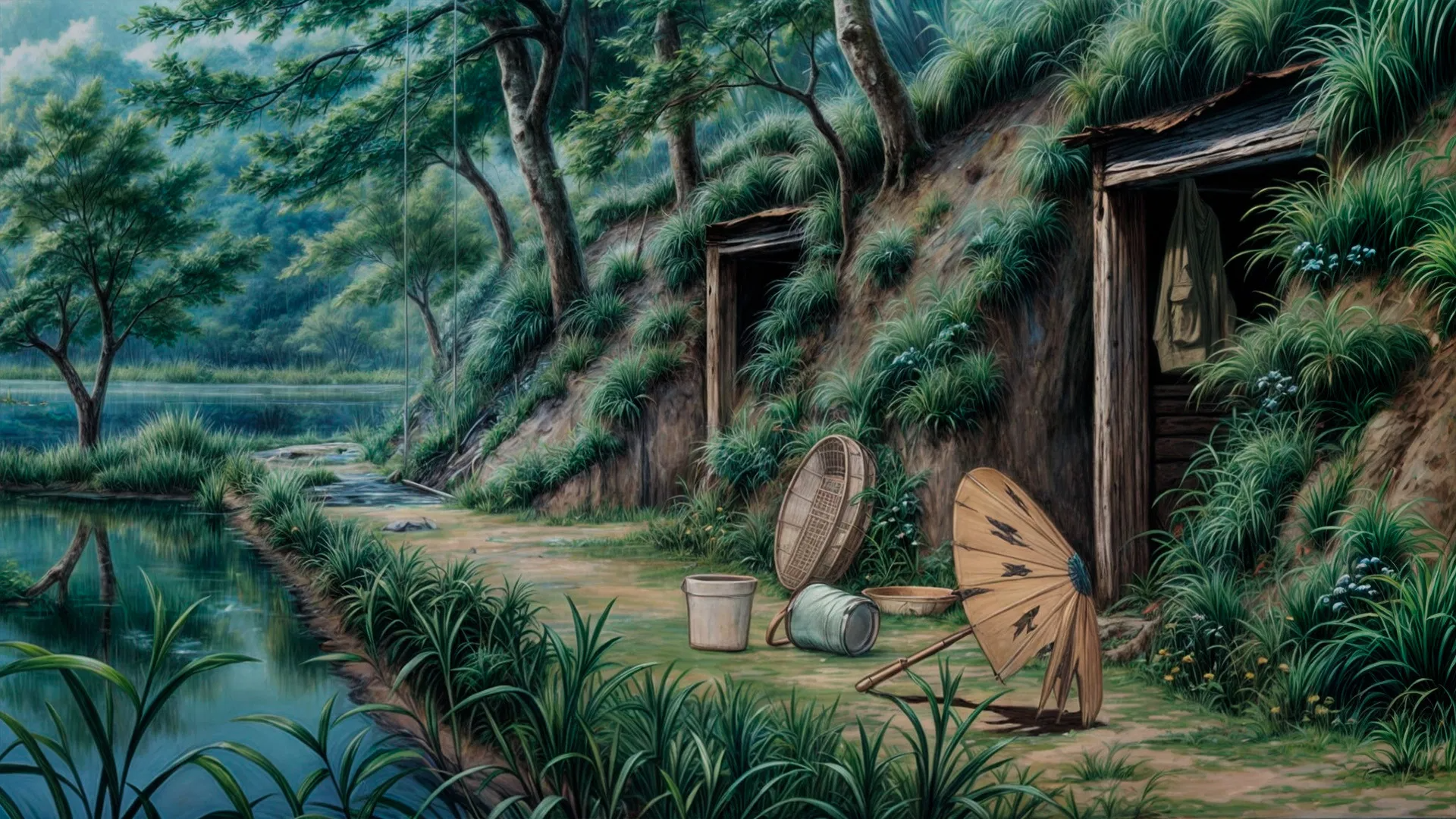
The story centers on Seita, a fourteen-year-old boy, and his four-year-old sister Setsuko, who lose their mother in one of the early attacks. Their father is serving in the Navy and unreachable. Taken in by an aunt who grows increasingly resentful of the children’s inability to contribute, the siblings eventually strike out on their own, finding shelter in an abandoned cave near a lake. What follows is a 90-minute descent that is impossible to stop and equally impossible to shake when is over.
What I liked
The restraint of the storytelling: Takahata does not use sad music to tell you how to feel. He shows you a child eating a piece of watermelon, a boy washing his sister’s hair in a pond, two kids chasing fireflies in the dark, and he trusts those moments to carry the weight. When the tragedy eventually closes in, it hits harder precisely because no one was pushing you toward it. That kind of confidence makes a very deep experience.
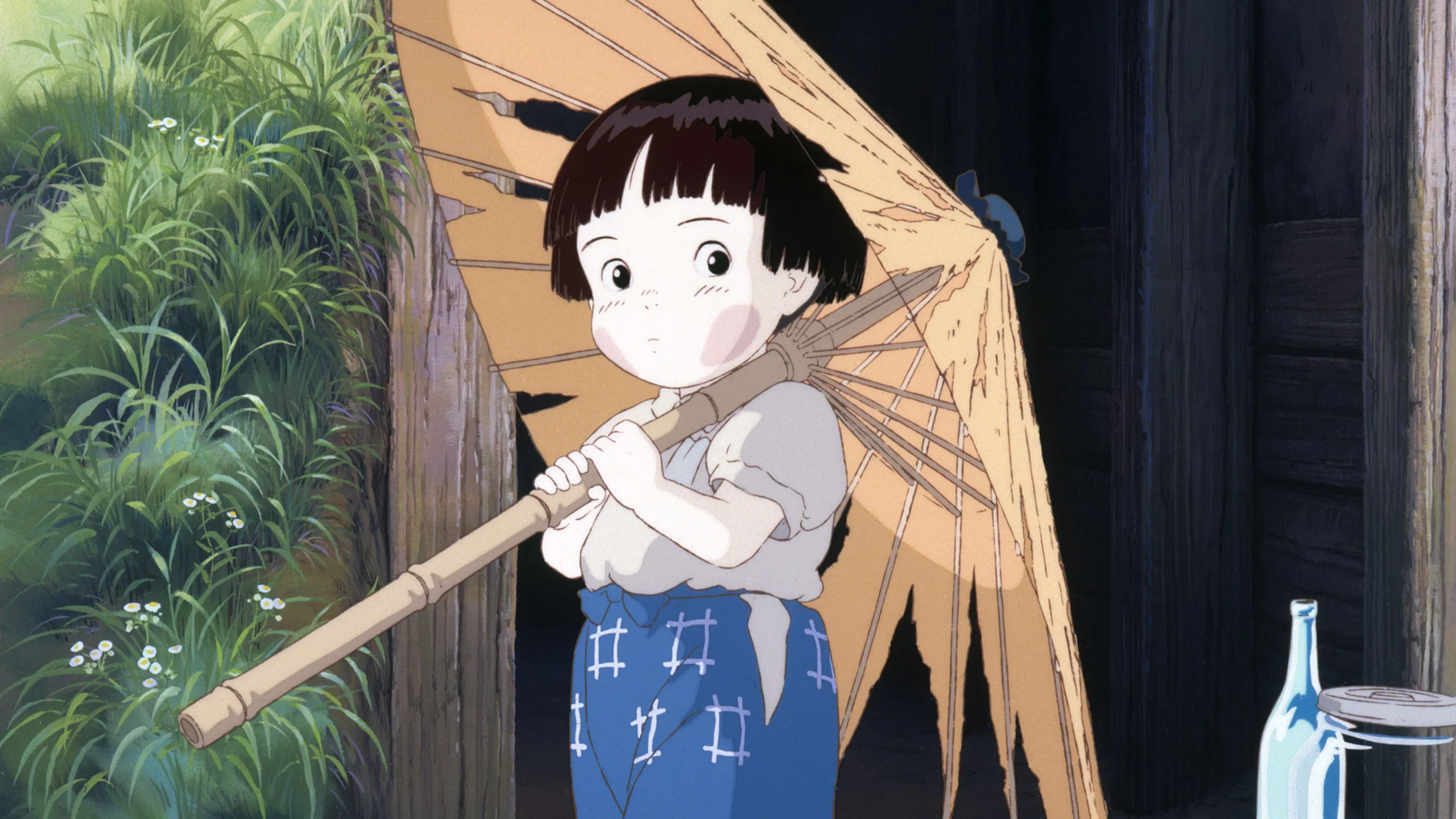
The sister, Setsuko, in the small moments: She is four years old and she acts like it. She plays with a toy. She gets excited about candy. She asks questions that break your heart because she does not understand what is happening. There is a scene where Seita has hidden their mother’s death from her, and Setsuko goes to find the box of ashes and understand on her own. I was not prepared for that. It is quiet and devastating scene that hits hard.
The animation’s treatment of ordinary life: Ghibli animates food like no one else in the world, and this film is proof. Every grain of rice, every small fire used to cook, every piece of cloth stretched over an opening in a cave, it is all rendered with a care that makes the scarcity feel real. You feel how much effort it takes to get almost nothing.
The way the kids remain kids: Even in the worst moments, Seita and Setsuko play, argue, splash around, and pretend. That was the detail that stayed with me the longest. The film does not turn them into symbols of suffering. They are just children who have been placed in an impossible situation, and they respond to it the way children do, which is to keep being themselves until they simply cannot anymore.
What could be better
Seita’s stubbornness is underexplored: There is a reading of this film where Seita’s pride and refusal to seek help from adults contributes directly to what happens. The film gestures at this but does not fully commit to it. A bit more ambiguity about his choices would have made the ending even more complicated and honest.
The aunt’s perspective never opens up: She is presented largely as an obstacle, a cold figure who embodies a cultural demand that everyone must contribute and earn their place. That pressure is real and worth examining, but she is kept at a distance that makes her feel more like a mechanism than a person. One scene from her point of view would have added something.
My insight
The film is not really about war at all. War is the environment. What the film is actually about is the question of what how society relies on each other, and what happens when every system around you fails on a devastating event.
Japan in 1945 had organized itself around collective sacrifice. The culture said: you contribute, you endure, you do not complain, and somehow this shared discipline will carry everyone through. That ethos is part of what made Japan’s postwar recovery one of the most remarkable things in modern economic history. But in 1945, watching two children be swallowed by a situation no child should face, that same ethos looks different. The aunt who tells them they need to earn their food is not a villain operating outside the system. She is the system, functioning exactly as intended, and the system has no instruction for orphaned children who cannot work.
What Takahata refuses to do, and this is the real achievement of the film, is to tell you how to feel about that. He does not present Seita as a saint or the aunt as a monster. He presents a collapse, and he shows you the people inside it making imperfect decisions under unbearable pressure. The tragedy is not that anyone is evil. It is that good enough is not always good enough, and that societies can function, even recover and thrive, while leaving specific people completely behind.
I came away from this film thinking about what it means to appreciate what you have, but not in the passive, motivational poster sense. The film earns that thought by showing you exactly what its absence looks like. There is a version of gratitude that only becomes possible once you understand what real scarcity feels like, not as an abstract concept, but as two children trying to figure out how to make four drops of soy sauce last another day.
Rating 🌟10/10
A film that does not try to make you cry, and is more shattering for it. Required viewing before any conversation about war, resilience, or what we actually owe each other.
Recommendation: Watch it with someone. This is not a film to process alone.
For discussion
The film suggests that a society built on collective duty and contribution can still fail the most vulnerable individuals within it. Japan rebuilt itself from this period into one of the most functional societies on earth. Does that recovery change how you read the tragedy at the center of this story, or does it make it harder to dismiss?
Related works
- My Neighbor Totoro (1988) — Originally screened as a double feature with Fireflies, and its warmth makes for a haunting contrast when you know both films come from the same year.
- Princess Mononoke (1997) — Another Ghibli film where civilization and survival are in direct conflict, though with a fantasy frame that makes the violence easier to watch.
- Spirited Away (2001) — A child navigating a world built by and for adults, with no map and no guarantee of rescue.
- Pan’s Labyrinth (2006) — A child using imagination to survive a war her country insists is already over.
- Schindler’s List (1993) — The closest comparison in emotional register: atrocity rendered without sentimentality, so the weight lands without manipulation.
Technical info
- Director: Isao Takahata
- Cast: Tsutomu Tatsumi, Ayano Shiraishi, Yoshiko Shinohara, Akemi Yamaguchi
- Platform: Netflix
- Year: 1988
- Genre: Animation, War, Drama